GORJS

Introduction
NYX wanted to build a community where 3D artists and digital beauty creators could shape the future of makeup together, not a typical brand collaboration, but a genuine creative collective with real governance power. The product strategy behind GORJS spanned the entry pass that brings collectors and creators into the community, to the systems that let artists submit work and the community decide what gets made.
Process
Entry Point
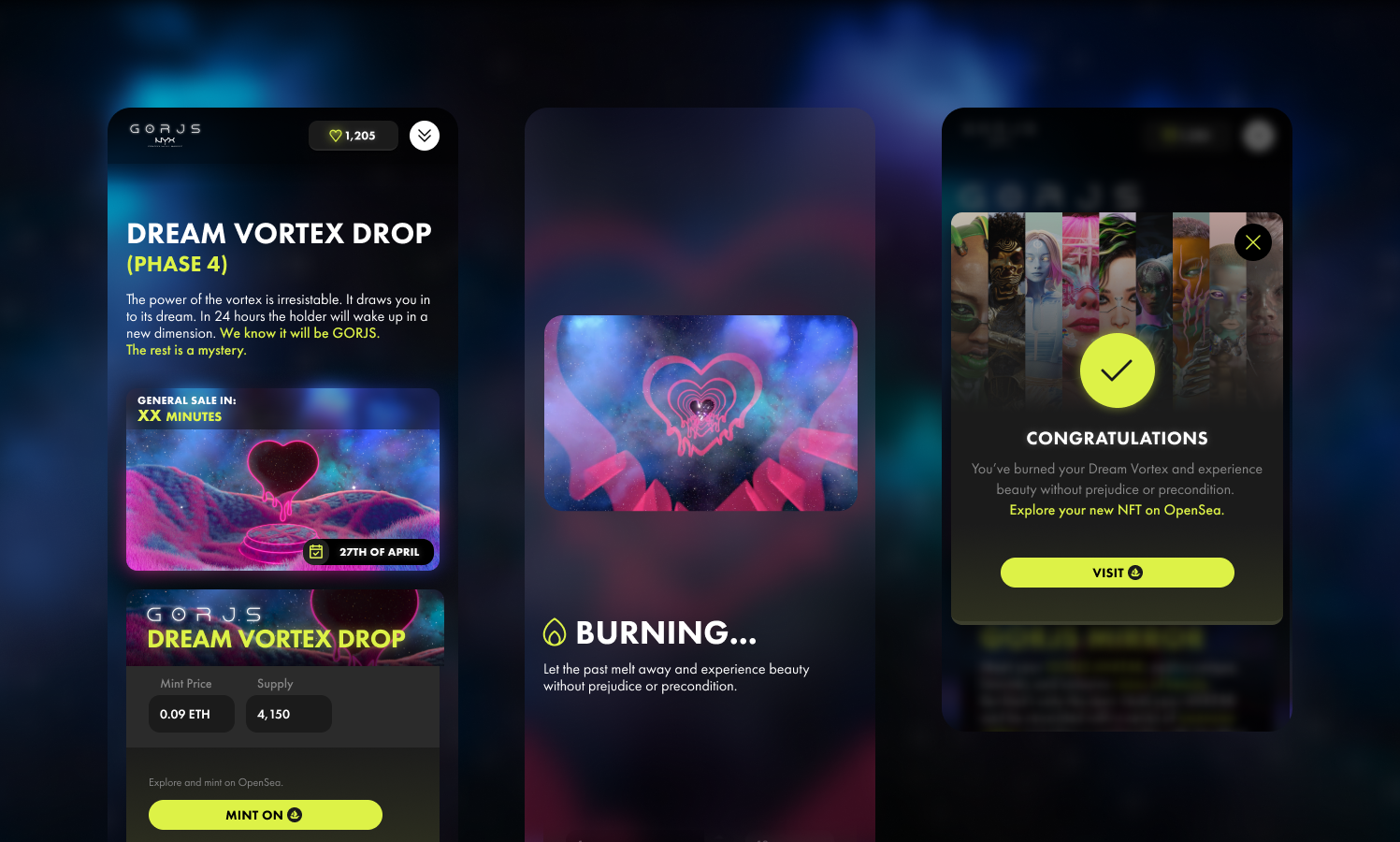
The FKWME Pass is the front door into GORJS, a limited collection capped at 1,000. Wallet level limits (a maximum of 3 per wallet across both the allowlist and general sale) kept access spread across a real community rather than concentrated in a few hands. The tiered launch, an allowlist phase followed by general sale, rewarded early community members without shutting newcomers out entirely.
Designing Around What an Artist Actually Submits
Artists could put forward one proposal a month, and couldn't open a new submission until their last approved project was finished, a real production cadence, not just a form to fill out. Each proposal covered collaborators, pricing, collection size, and timeline. The Creator Portal's submission experience was built around that cadence: a space where an artist could put a project forward on their own schedule, see where it stood, and know when they were clear to submit the next one.
Letting the Community Decide What Gets Made
Rather than NYX or a small internal team greenlighting projects, GORJS put approval in the hands of its own members. Voting wasn't open to anyone with a wallet, it was gated to people who'd actually bought into the ecosystem: FKWME Pass or Genesis collection holders, who accrued GORJS points continuously for as long as they held, then spent those points to vote on artist proposals. A minimum participation threshold kept the process meaningful rather than symbolic. We also designed around a real technical constraint: instead of a separate gas fee transaction per vote, batch voting let members cast every vote for a period in a single transaction, removing a real cost barrier to participation.
Rewarding Early, Genuine Support
Voting weight itself was time sensitive. A vote cast within the first 24 hours of a proposal going live counted double, 200 points cast in that window carried the weight of 400, with the multiplier tapering the longer a member waited. Members who backed a project early, before it was guaranteed to be funded, also received priority access once it launched. The system made a simple idea legible: support something before it's a sure thing, and get rewarded for the conviction, not just the eventual popularity.
Tools for the Artists, Not Just the Collectors
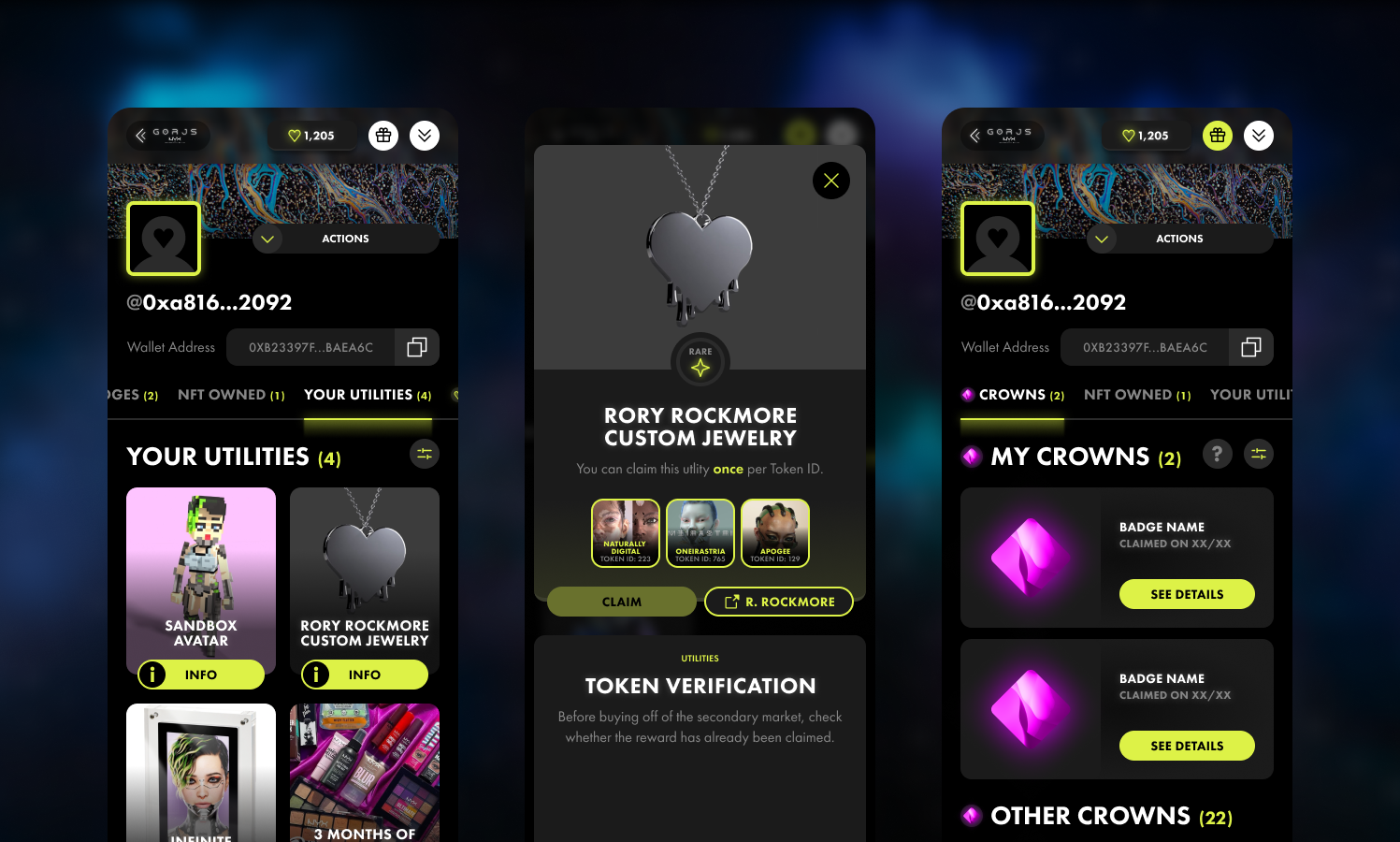
Beyond the collector facing side, GORJS planned a growing suite of tools for its creators: shared GPU access, file storage, and cross platform tooling for building game ready assets. This was a deliberate shift in who the product served, treating artists as the DAO's core users, not just its content suppliers.


Conclusion
GORJS launched with an initial 15 founding artists and Web3 advisors, and its Discord community grew to more than 15,000 members within two weeks of launch. The collection reached the top of the sales charts on OpenSea shortly after release, and GORJS went on to win an internal L'Oreal award for innovation.
